
Open-Frame Generator
1. Structure and Appearance:
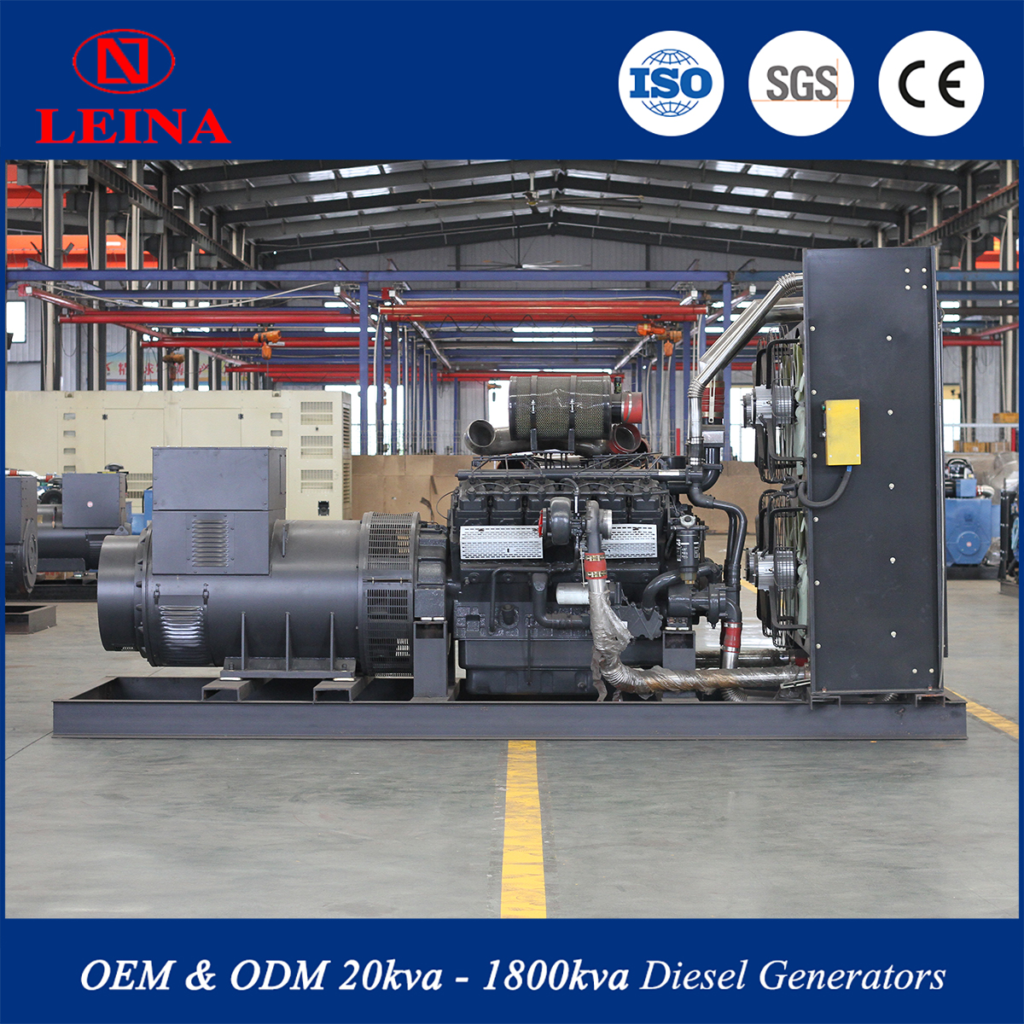
Like a “naked” combination of an engine and generator set, all components (engine, generator, control panel, fuel tank, etc.) are mounted on an open steel base frame.
No outer casing; the radiator is completely exposed and cooled by forced airflow from a fan.
2. Noise Level:
Noise levels are very high, typically exceeding 85-100 decibels, equivalent to the volume of busy traffic or power tools.
Normal conversation is impossible nearby when the generator is running.
3. Heat Dissipation and Power:
Excellent heat dissipation due to complete exposure to air.
Higher and more stable rated and peak power for the same engine displacement, allowing for prolonged continuous high-load operation.
4. Size and Weight:
Relatively lightweight (no outer casing), and simpler in structure.
While potentially more compact, exposed components (such as the muffler and exhaust pipe) require more safety space.
5. Price and Maintenance:
Due to its simple structure and low manufacturing cost, the price is significantly lower.
Maintenance and repair are very convenient; all components are clearly visible and easy to operate.
6. Main Application Scenarios:
Outdoor locations where noise is not a concern, such as construction sites, on-site engineering, and agricultural irrigation.
As a backup power source, installed in a separate soundproof machine room or equipment room.
Industrial scenarios requiring high power and long-term operation.
Silent Generator
1. Structure and Appearance:
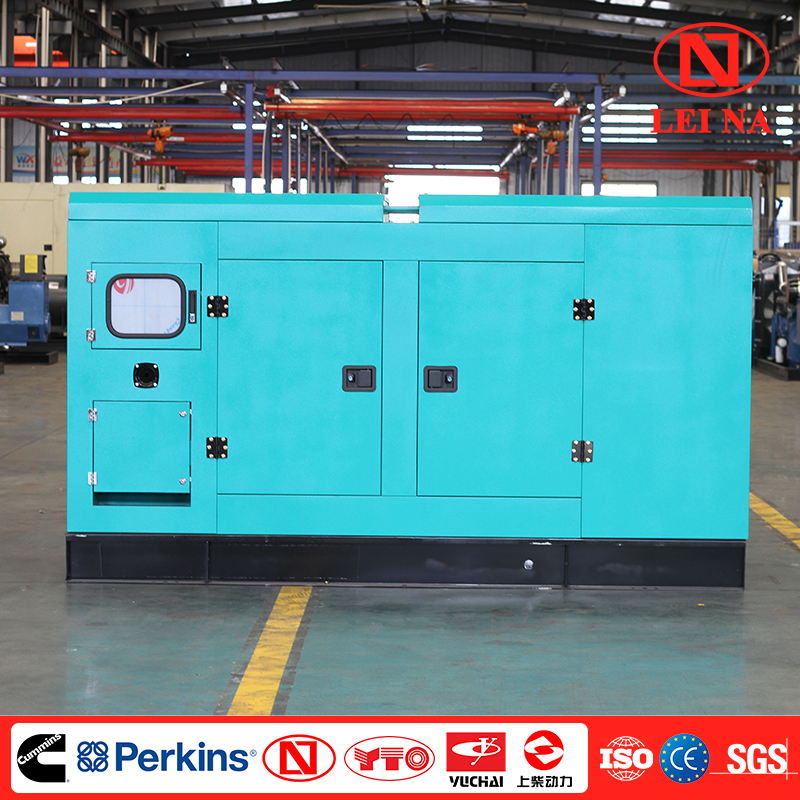
The entire generator set (engine, generator, fuel tank, etc.) is enclosed in a specially designed metal casing (soundproof enclosure).
The inner walls of the casing are lined with highly efficient sound-absorbing and sound-insulating materials (such as high-density foam).
The intake and exhaust systems are specially designed with soundproof channels and louvers to reduce noise leakage while ensuring heat dissipation.
2. Noise Level:
Noise is significantly reduced, typically between 50-75 decibels (measured at a distance of 7 meters from the machine).
At low loads, noise levels can be as low as 50 decibels, equivalent to normal indoor conversation. This is only 1/4 to 1/2 the volume of an open-frame generator.
3. Cooling and Power:
The cooling system relies on carefully designed air ducts, but its efficiency is lower than that of an open-frame generator. Due to cooling limitations and increased exhaust back pressure, its rated power is typically slightly lower (approximately 5-10%) than comparable open-frame generators of the same displacement.
During prolonged full-load operation, attention should be paid to cooling conditions.
4. Size and Weight:
It is larger and heavier due to its casing.
It has a sleek appearance, looking more like a complete “device”.
5. Price and Maintenance:
It is expensive, costing 30%-100% or more more than an open-frame generator of equivalent power.
Maintenance and repair are slightly more complex, requiring access doors or panels.
6. Main Application Scenarios:
Noise Concerns: Campsites, RV travel, outdoor activities, night market stalls, mobile coffee trucks, etc.
Urban and Residential Areas: Providing backup power for shops, emergency power for homes, and power for emergency repairs in the community to avoid disturbing residents.
Places with High Environmental and Aesthetic Requirements: Hospitals, schools, areas around data centers, film shooting locations, etc.